
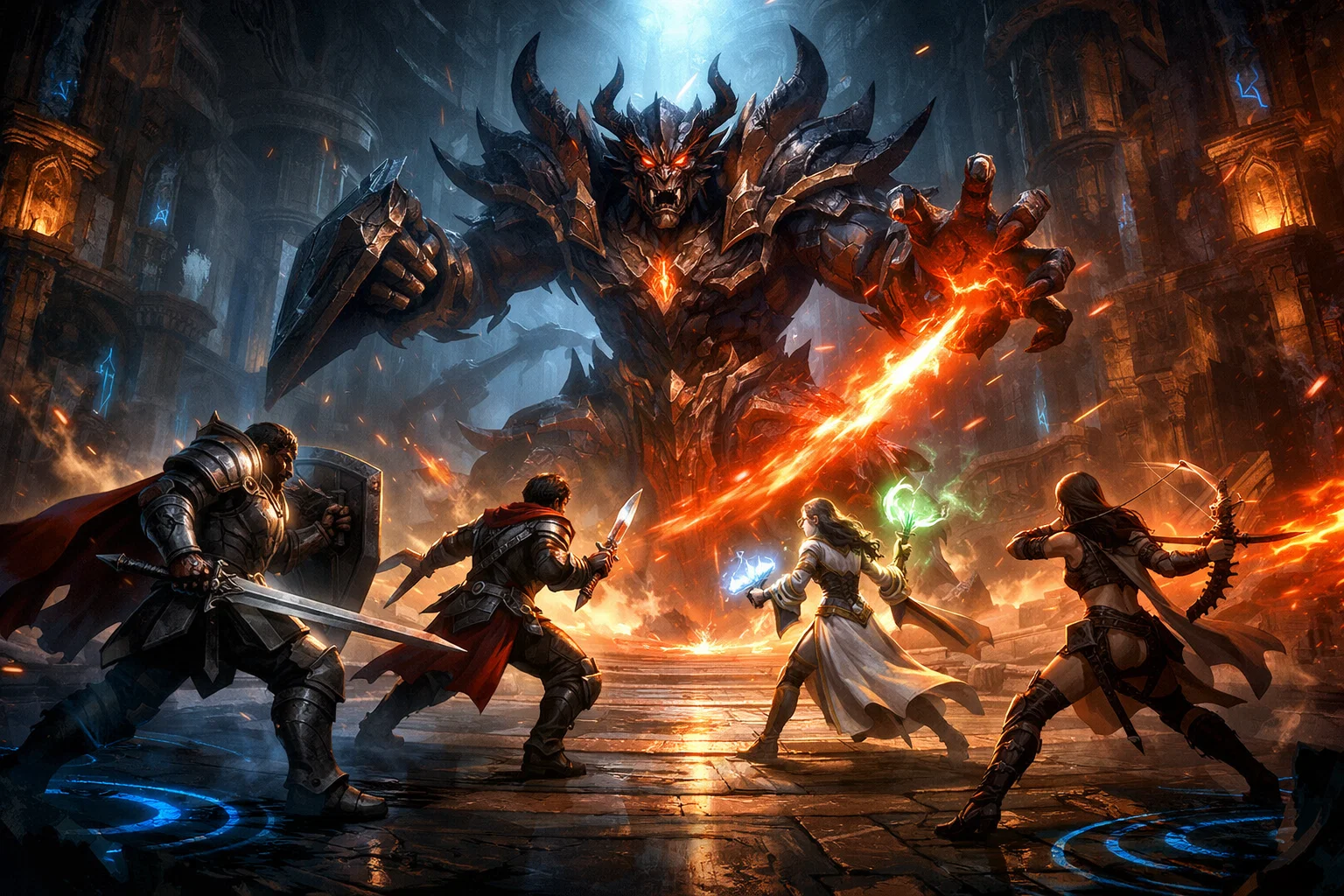
With Aion 2 officially launching in Korea, many players have been curious about what kind of PvE experience the game actually delivers. On paper, it looks impressive: a theme park–style MMORPG packed with instanced content, flashy visuals, and a strong focus on dungeon gameplay. After spending time reviewing the available content and systems, I want to break down how Aion 2 really feels from a PvE player’s perspective, including what works well and where things start to fall apart.
This is not a hate post, and it’s definitely not blind praise either. Think of it as a practical overview from someone who enjoys PvE-focused MMOs but also cares deeply about progression, challenge, and long-term motivation.
A Huge Amount of PvE Content Right From Launch
One thing Aion 2 absolutely gets right is quantity. For a newly released MMO, the amount of PvE content is honestly surprising. The game launches with eight group dungeons that come with different difficulty tiers, two four-player raid-style instances, and one full eight-player raid. On top of that, solo players get access to four different types of solo dungeons.
Altogether, this adds up to around 50 unique bosses. Visually, these encounters are stunning. Dungeon environments are detailed, bosses look cinematic, and first-time clears feel exciting simply because everything looks so polished. From a presentation standpoint, Aion 2 sets a very strong foundation and easily hooks players during their early hours.
Boss Design Focuses on Dodging, Not Mechanics
Where opinions start to split is in the actual boss design. In most theme park MMOs, bosses rely heavily on mechanics: positioning checks, role-specific responsibilities, and coordinated execution. In Aion 2, around 95 percent of bosses don’t really work that way.
Instead, the core gameplay loop revolves around dodging visible attack indicators. Bosses constantly fill the arena with telegraphed attacks, and success mostly depends on how well you can move and react. There are some light mechanics here and there, but they’re very basic. One of the more complex examples involves a marked player needing to share damage with teammates by standing close together. That’s about as deep as it gets.
For new players, this approach has upsides. You can jump into dungeons without watching guides and learn fights naturally. You’ll probably die a few times, but nothing feels overly punishing. That makes early PvE accessible and friendly, especially for casual players.
The downside is that gear matters far more than skill for a long time. With a high enough item level, many attacks can simply be ignored while healers brute-force through the damage. True difficulty only shows up much later.
Progression Feels Disconnected From Dungeon Play
This is where PvE-focused players may start to feel frustrated. Aion 2 uses three types of gear: PvP gear, PvE gear, and neutral gear. The problem is that all dungeon drops are neutral gear. These items don’t provide any PvE-specific bonuses and are essentially temporary placeholders.
Actual PvE gear can only be obtained through crafting or by purchasing it from the auction house. This means dungeon runs don’t directly reward you with the gear you ultimately want to use. Instead, you’re farming gold and materials, knowing that everything you loot will eventually be replaced.
As a result, dungeons feel more like a currency grind than meaningful progression. Many players end up running instances mainly to earn Aion 2 Kinah, since gold becomes the real bottleneck for buying or crafting proper PvE gear later on. That disconnect between effort and reward makes long-term dungeon grinding feel flat.
Economy, Convenience, and Pay-to-Win Concerns
The progression issue is made worse by how open the economy is. Crafted PvE gear can be freely sold on the auction house, and there are no meaningful restrictions. In practice, this means players with enough resources can skip most of the grind entirely.
Because gold plays such a central role, some players look for external options like an Aion 2 Kinah currency shop to speed things up. Platforms such as U4GM are often discussed in the community for this reason, though this also highlights a deeper design issue: PvE progression becomes more about purchasing power than gameplay mastery.
On top of that, instant revival items can be used almost without limitation in most PvE content. As long as the entire party doesn’t wipe, players can revive repeatedly during boss fights. These items are also purchasable, which removes much of the tension and consequence from difficult encounters.
Class Roles and Group Design Don’t Line Up
Aion 2 technically uses the classic holy trinity of tank, healer, and DPS. However, group sizes are capped at four players for most content. Predictably, healers are always in short supply, leading to long queue times and lobby waiting.
Tanks, on the other hand, often feel unnecessary. Many bosses have strict enrage timers, and running without a tank can actually make fights easier. This creates an awkward situation where the game supports traditional roles but doesn’t design content in a way that truly needs them.
Dungeon Flow and Skippable Trash
Another strange design choice is how easily trash mobs can be skipped. In most dungeons, players sprint straight to mini-bosses and the final boss, ignoring nearly all enemies in between. Some time-based dungeons even encourage sending one player ahead to activate teleport points while others fight bosses.
The environments look great, but the layout often feels oversized and underutilized. Clearing trash rarely matters, which makes dungeons feel more like boss rushes than cohesive adventures.
Late-Game PvE and Realistic Expectations
The eight-player raid is positioned as true endgame PvE, but the gear requirements are extremely high. For non-paying players, reaching the necessary stats within the first couple of months is unrealistic. Mechanically, the raid doesn’t change much either. It still focuses heavily on dodging, just with tighter timing and higher damage.
Despite all these issues, Aion 2 isn’t a bad game. If you go in with the right expectations and focus on enjoying the visuals and first-time dungeon experiences, there’s fun to be had. Just don’t expect a deep, long-term PvE grind that will keep you invested for thousands of hours.
FAQ
Is Aion 2 mainly a PvE or PvP game
Aion 2 is designed as a PvE-centric theme park MMO, though PvP systems and gear still exist alongside PvE content.
Do dungeons drop best-in-slot PvE gear
No. Dungeons only drop neutral gear. PvE-specific gear must be crafted or bought from the auction house.
Is PvE progression pay-to-win
PvE progression leans heavily toward pay-to-win due to purchasable gold, tradable crafted gear, and revive items.
Are tanks required for most PvE content
Not really. Many groups perform better without tanks due to enrage timers and boss design.
Can solo players enjoy the game
Yes. There are multiple solo dungeons, and early content is very accessible without group coordination.
Is the eight-player raid worth rushing
For most players, no. The gear requirements are very high, and the experience is similar to other PvE content, just harder.
Aion 2 has strong visuals, plenty of PvE content, and a welcoming early-game experience. However, shallow mechanics, awkward progression, and heavy reliance on gold hold it back from being a truly great PvE MMO. It’s enjoyable in short bursts, especially at launch, but long-term PvE players may struggle to stay motivated unless major systems are improved.
Deep Analysis: Aion 2 Sorcerer Build Guide: Fire, Ice, and Pure Destruction